Kenya Bankers Association Pushes Back Against KRA's Proposed VAT Plan
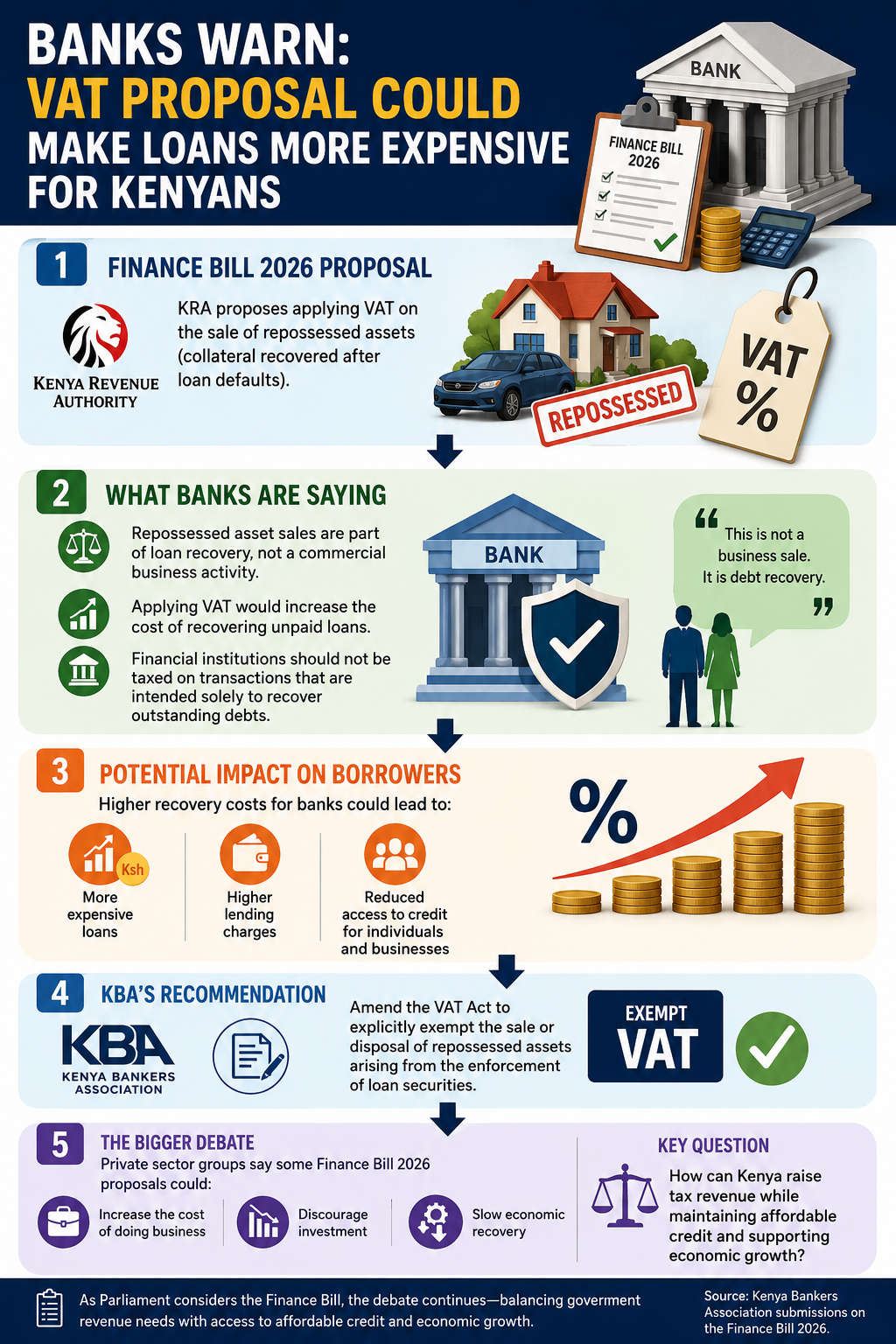
The Kenya Bankers Association (KBA) has urged Parliament to reject a proposal by the Kenya Revenue Authority (KRA) that would subject the sale of repossessed assets to Value Added Tax (VAT), arguing that the move could drive up the cost of borrowing and make credit less accessible for Kenyans.
The proposal, contained in the Finance Bill 2026, seeks to clarify the tax treatment of collateral sold by financial institutions after borrowers default on loans. However, KBA argues that repossessing and selling assets is part of the loan recovery process not a commercial business activity that should attract VAT.
Concerns over higher borrowing costs
According to the association, introducing VAT on repossessed properties would increase recovery costs for banks. Those additional costs could eventually be passed on to borrowers through higher lending charges, making loans more expensive for individuals and businesses.
KBA has proposed amending the VAT Act to explicitly exempt the sale or disposal of repossessed assets arising from the enforcement of loan securities. It argues that financial institutions should not be taxed on transactions that are intended solely to recover outstanding debts.
Wider concerns over the Finance Bill
The bankers' lobby is among several private sector organisations that have raised concerns about aspects of the Finance Bill 2026, saying some tax proposals could increase the cost of doing business and slow economic recovery. Business groups have called for tax measures that broaden the tax base without discouraging investment or financial inclusion.
As Parliament considers the Finance Bill, the debate over the proposed VAT changes is expected to continue, with banks, businesses and policymakers weighing the need to raise government revenue against the potential impact on access to affordable credit and economic growth.